Authors: Neena Joshi, Nguyen Thi Kim Dung, Nadir Cardozo, Carla Boccuti, Julia Kors, Paloma Loreti Gambaccini, Lucas Villalba, Neymat Chadha, Devaki Nambiar
Introduction
The rise of smartphones and messaging apps has expanded how people maintain social connections, reducing isolation while enabling participation across distance and time.1–3 In the post-COVID-19 emergency world, online interaction increasingly substitutes for face-to-face communication, particularly where geography, safety, or scheduling limit in-person meetings.4 Digital tools have improved access to workplaces, community networks, and research participation for people needing flexibility, living in resource-constrained settings, or navigating stigma related to health risks, gender identity, or sexuality.4–6 They also connect people across wide geographic areas and enable safe interaction where geopolitical situations, travel restrictions, or threats to free expression make convening dangerous and difficult.
While these platforms cannot replace in-person connections, civil society organizations (CSOs) and health and human rights advocates increasingly recognize the potential of digital platforms, when used strategically and with awareness of their limitations, to bring to fore the role of communities in advancing progress on universal health coverage (UHC).
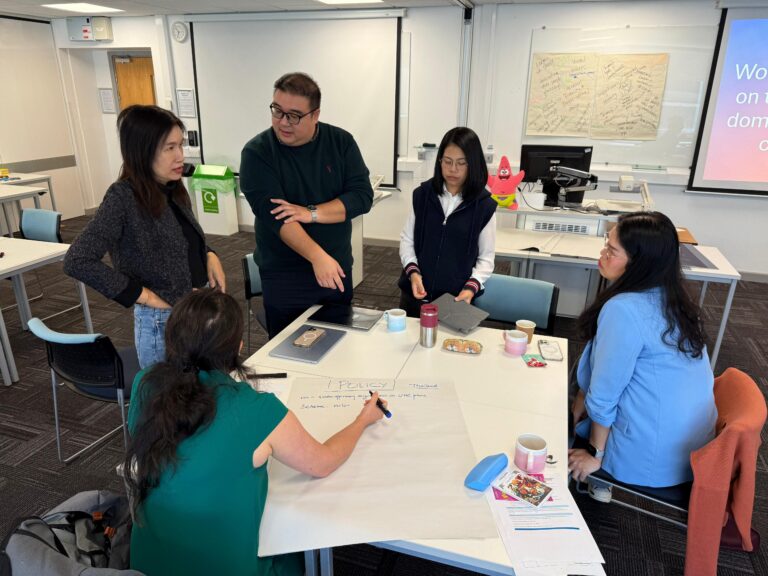
To build on this potential and the existing evidence of the use of digital messaging tools in health communication, activism, and peer support, especially in low-resource and marginalized contexts, the Social Participation for Health Engagement, Research and Empowerment (SPHERE) consortium’s country partners used digital platforms to enhance social participation for health (SPH) in their countries.7,8 Recognizing an opportunity for cross-country learning, The SPHERE Secretariat convened a virtual workshop where partners shared their experiences, reflected on challenges and lessons, and explored how digital platforms can support inclusive and meaningful SPH. The country examples, key considerations when using digital platforms for SPH, and lessons learnt outlined below emerged from the workshop presentations and discussion.
Country examples
The Centre for Supporting Community Development Initiatives (SCDI) in Vietnam and Fundacion Huesped in Argentina each used digital platforms that were familiar to the communities they were working with. However, to ensure these tools genuinely facilitated peer support, strengthened advocacy capacity, and cultivated a community voice, while also responding to the distinct vulnerabilities and forms of exclusion the communities face, they adapted and applied these tools in ways that were unique to each of their contexts.
Vietnam
SCDI is a Vietnamese not-for-profit organization working to improve social inclusion. In 2024, SCDI started using Zalo, a free messaging and calling application used by the majority of people with mobile phones in Vietnam.
SCDI utilizes two types of Zalo groups. The first is small, provincial-based community groups, which allows them to support local communities and their unique needs. This decentralized structure enables real-time peer-to-peer support and rapid coordination, allowing community workers to quickly seek advice on complex cases, bypassing geographical and administrative barriers, and expedite case management and local service delivery.
The second group is for the entire SCDI community, which is SCDI’s main channel for interaction and large-scale standardized capacity-building.
In virtual and in-person community meetings, SCDI community members have shared that Zalo has improved SCDI’s efficiency in sharing information, enhanced community capacity, and increased their interaction with SCDI. They “appreciate the way SCDI provides information in the Zalo group: the content is concise, presented in diverse formats, and is highly accessible and participatory.”
Argentina
Fundación Huésped is an Argentine organization focused on improving public health from a human rights perspective. In 2024, Fundación Huésped began planning an online course on social participation and UHC. The course was first launched on Fundación Huésped’s e‑huesped training platform targeting transgender individuals and activists with the objective of strengthening their advocacy capacities to promote equitable access to health. It was later adapted to be more accessible via WhatsApp.
Participants were encouraged to interact with each other through the WhatsApp group, an already familiar and accessible engagement and communication tool. Adapting the content for WhatsApp facilitated flexibility, accommodating the realities of individuals facing intersecting economic, social, and institutional barriers, affected by economic crises, discrimination, and high levels of stigma, who may have limited internet access or be unfamiliar with platforms typically used on computers.
Based on feedback from participants, the course was perceived as being innovative, useful and approachable, and its format and structure encourage participants to share the materials and what they learned in their communities.
Key considerations identified for effective use of digital platforms for SPH
Fundación Huésped and SCDI’s experiences show that familiar digital platforms can foster connections, support, and shared learning. Already widely used, they facilitate the organic spread of content through participants’ networks, a powerful feature in contexts where marginalized groups face hostility and isolation.
Hybrid content development – enhancing interactivity and supplementing where necessary. In Fundación Huésped’s WhatsApp course, content from their e-huesped was reformulated into short WhatsApp messages with videos, photos and interactive resources. This facilitated participants sharing the course’s materials within their networks, multiplying the course’s reach. To strike a balance between accessibility and overload – group chats were open only two hours a day, twice a week – allowing focused participation without constant notifications. A central priority of the course was to keep it useful for the community in the current country context. One highlight of the course was the final activity, which featured a transgender leader and activist sharing her elevator pitch, a 30 – 60 second statement conveying community demands to decision-makers. Participants were then invited to create and share their own recordings with the group, which can be directly applied in their advocacy work.
In Vietnam, SCDI leveraged Zalo’s popularity to create an interactive community space for games and debates. Initially, interactions occurred daily, but as the community became more familiar, interactions occurred 2-3 times per week. Recognizing platform familiarity was not enough, SCDI paired digital engagement with staff-led guidance and technical support. This hybrid approach, blending trusted technology, interactive content, and hands-on assistance, maximized participation by addressing technical and confidence barriers. In Gia Lai and Nghe An provinces and Hai Phong city, staff used their regular, offline community meetings to conduct small, hands-on tutorials on using Zalo. This support was observed to be the most critical during the initial launch and whenever a new, complex activity, like a debate, was introduced. SCDI’s staff also messaged hesitant or less active members to encourage them to join. This hands-on, trust-based support ensured that members who were less tech-savvy felt included and confident, lowering the barrier to participation and learning.
Addressing mis- /disinformation and hate speech
SCDI addresses mis- and disinformation by verifying all shared information, and correcting inaccuracies with evidence-based clarification on the group’s core topics. This prevents the Zalo group from becoming a general fact-checking forum, while ensuring the community had access to accurate data and SCDI remains a trusted source of information. Similarly, Fundación Huésped disseminates updated and factual information on the Argentine legal framework and the rights guaranteed by the Equal Marriage and Gender Identity Laws as tools to combat misinformation among their community members.
Protecting privacy and engaging sensitive groups
To protect participants from stigma and discrimination, organizers of the WhatsApp based e-huesped course requested participant preference for receiving the course via a WhatsApp group or individually before entry of names and national ID numbers. They also had a filtering function to exclude participants who may make inappropriate comments. These measures were implemented explicitly to protect participants in a context of high stigma and online harassment. Within the course, the objectives of the space are clarified, and it is emphasized that no sensitive information should be shared.
Similarly, SCDI maintains anonymity by keeping group discussions focused on general issues. Any in-depth discussions requiring detailed personal information are conducted through virtual or in-person one-on-one exchanges, depending on the context of the conversation and the community member’s preferences, to safeguard privacy.
Lessons learnt
Based on their experiences, SCDI and Fundación Huésped recommends three strategies for community organizations and individuals using online messaging platforms to strengthen SPH:
- Pilot the approach and the digital platform with a small group to gather feedback, refine the approach, and confirm its suitability for the intended outcome.
- Ensure the platform and its contents meet community needs and are directly useful for advocates in their work.
- Protect participants, especially those in vulnerable and marginalized situations, and restrict access for inappropriate and dangerous actors when necessary.
Digital platforms can serve as powerful tools for community organizations to strengthen advocates’ capacity for meaningful SPH, when co‑created with communities and used in conjunction with face‑to‑face advocacy opportunities. Further research should explore how these tools can be tailored to reach hard-to-reach groups, particularly those facing intersectional vulnerabilities, and better engage them in SPH efforts.
References
1. Bennett WL, Segerberg A. The Logic of Connective Action: Digital media and the personalization of contentious politics. Inf Commun Soc. 2012;15(5):739-768. doi:10.1080/1369118X.2012.670661
2. Networks of Outrage and Hope: Social Movements in the Internet Age, 2nd Edition. Wiley.com. Accessed April 13, 2026. https://www.wiley.com/en-us/Networks+of+Outrage+and+Hope%3A+Social+Movements+in+the+Internet+Age%2C+2nd+Edition-p-9780745695761
3. Loader BD, Mercea D. Networking Democracy?: Social media innovations and participatory politics. Inf Commun Soc. 2011;14(6):757-769. doi:10.1080/1369118X.2011.592648
4. Kordova S, Hirschprung RS. Effectiveness of the forced usage of alternative digital platforms during the COVID-19 pandemic in project communication management. Heliyon. 2023;9(11):e21812. doi:10.1016/j.heliyon.2023.e21812
5. Addressing mental health.Immune Deficiency Foundation. Accessed August 15, 2025. https://primaryimmune.org/living-primary-immunodeficiency/addressing-mental-health
6. Haase S, Zweigenthal V, Müller A. Using online spaces to recruit Kenyan queer womxn and trans men in restrictive offline settings. Arch Public Health. 2022;80(1):82. doi:10.1186/s13690-022-00824-3
7. Alcides Velasquez, Andrea M. Quenette, Hernando Rojas. WhatsApp Political Expression and Political Participation: The Role of Ethnic Minorities’ Group Solidarity and Political Talk Ethnic Heterogeneity. Int J Commun. 2021;15:2743-2764.
8. Thakur A, Bhageerathy R, Mithra P, Sekaran VC, Kumar S. From Peer Support to Program Supervision: Qualitative Insights on WhatsApp as Informal Digital Infrastructure for Community Health Workers and Public Health Officers in an Indian High-Priority Aspirational District. Healthcare. 2025;13(17):2223. doi:10.3390/healthcare13172223